
Archer County Parole or Probation
Parole and mandatory supervision follow confinement in the Texas Department of Criminal Justice. The Texas Board of Pardons and Paroles makes release decisions, while the TDCJ Parole Division handles field supervision. Probation, formally called community supervision, is imposed by a court. Archer probation is administered through the 97th Judicial District Community Supervision and Corrections Department, or CSCD. A probation order may exist even when the person never entered TDCJ.
The distinction controls where to search. A TDCJ parole result can show a state release date, status, and assigned parole office. A district or county court judgment and the CSCD record establish probation. Neither office can substitute for the other, and a monthly probation report does not prove that a person was released from state prison.
| Point | Parole or mandatory supervision | Probation |
|---|---|---|
| Source | Release after TDCJ incarceration | Court sentence or order |
| Decision authority | Texas Board of Pardons and Paroles | Sentencing court |
| Field office | TDCJ Parole Division | 97th Judicial District CSCD |
| Archer route | Wichita Falls District Parole Office | Archer County CSO |
| End record | Parole or mandatory-supervision discharge | Court and CSCD completion record |
- Parole
- Conditional release from prison before sentence expiration.
- Mandatory supervision
- A statutory release form that still requires supervision and, for many cases, discretionary review.
- Probation
- Court-ordered community supervision, sometimes imposed instead of confinement.
- Discharge
- The formal end of a supervision term.
Check Archer County Supervision Status
Begin with a reliable name, date of birth, court case number, SID, or TDCJ number. Common names can produce false matches. The last custody system and judgment point to the proper route. A person transferred from Archer County Jail to TDCJ was not released to the community when the local booking ended.
- Search the TDCJ Online Inmate Search by TDCJ number, SID, or name, then open Parole Review Information.
- Use the BPP review-results instructions or call the Parole Status Line at 844-512-0461 with the name, TDCJ-CID number, and date of birth.
- For probation, find the sentencing order through the court and contact the 97th Judicial District adult probation office.
- Ask for current status, the correct office, supervision start or release date, and discharge date. Request only releasable information.
- Pair supervision data with the actual release record when the physical custody endpoint matters. The Archer County released-inmate search path explains that record chain.
TDCJ lists certain parole facts as public, including status, warrant information, release and discharge dates, sentence, county and court, and the supervising officer's name. Broader parole files remain restricted under Texas Government Code section 508.313.
Archer County Supervision Offices
Archer County has a useful two-office split. TDCJ assigns Archer parole cases to Region V's Wichita Falls District Parole Office. Local probation remains with the Archer CSO in the 97th Judicial District CSCD. Contact the office tied to the judgment or TDCJ release, not merely the closest corrections office.
Wichita Falls District Parole Office, Region V3100 Seymour Highway, Suite 118
Wichita Falls, TX 76301
Phone: 940-322-2721
Fax: 940-766-4216
The TDCJ county assignment index documents the Archer-to-Wichita Falls route. The official page shown below makes that assignment visible.
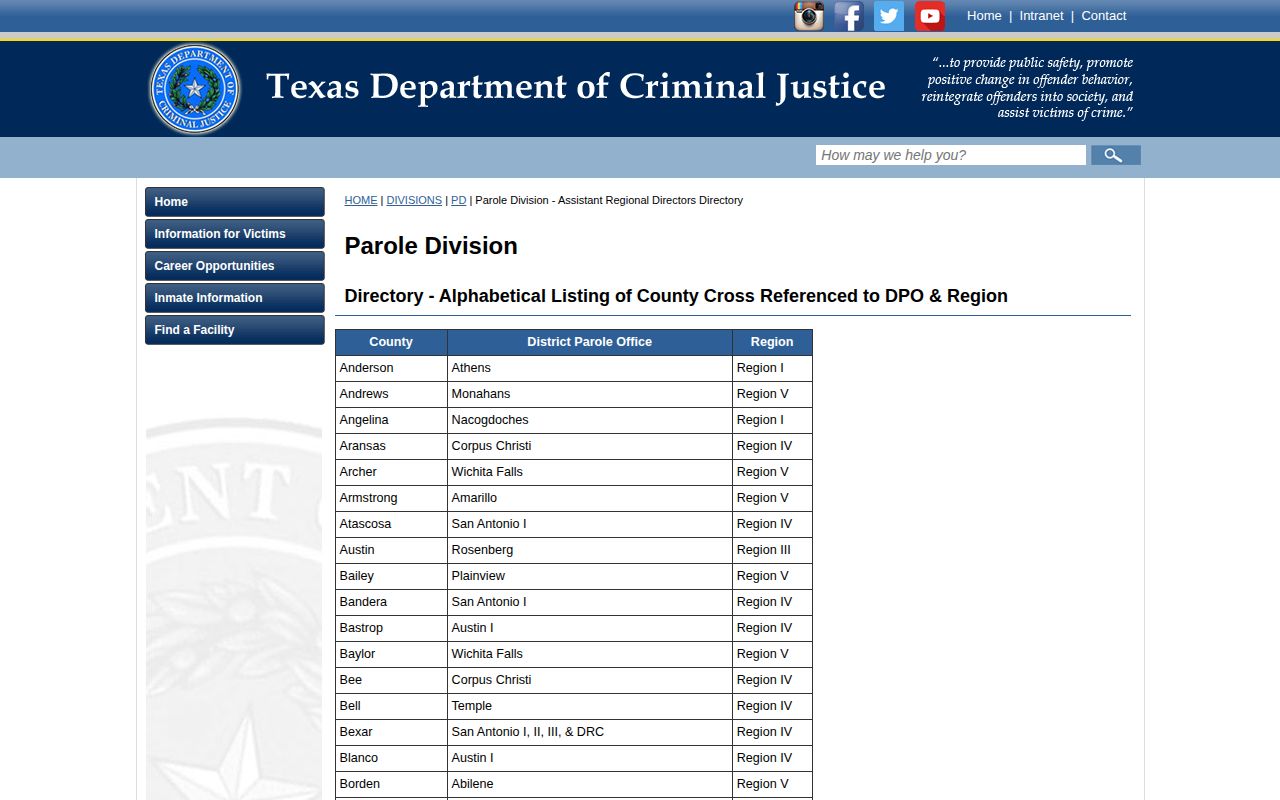
This assignment is the correct parole contact path, but it does not authorize disclosure of protected case material.
Archer County CSO, Robert GuerinP.O. Box 666
Archer City, TX 76351
Phone: 940-574-4997
Fax: 940-574-2897
The adult probation page also provides the CSCD monthly-report route.
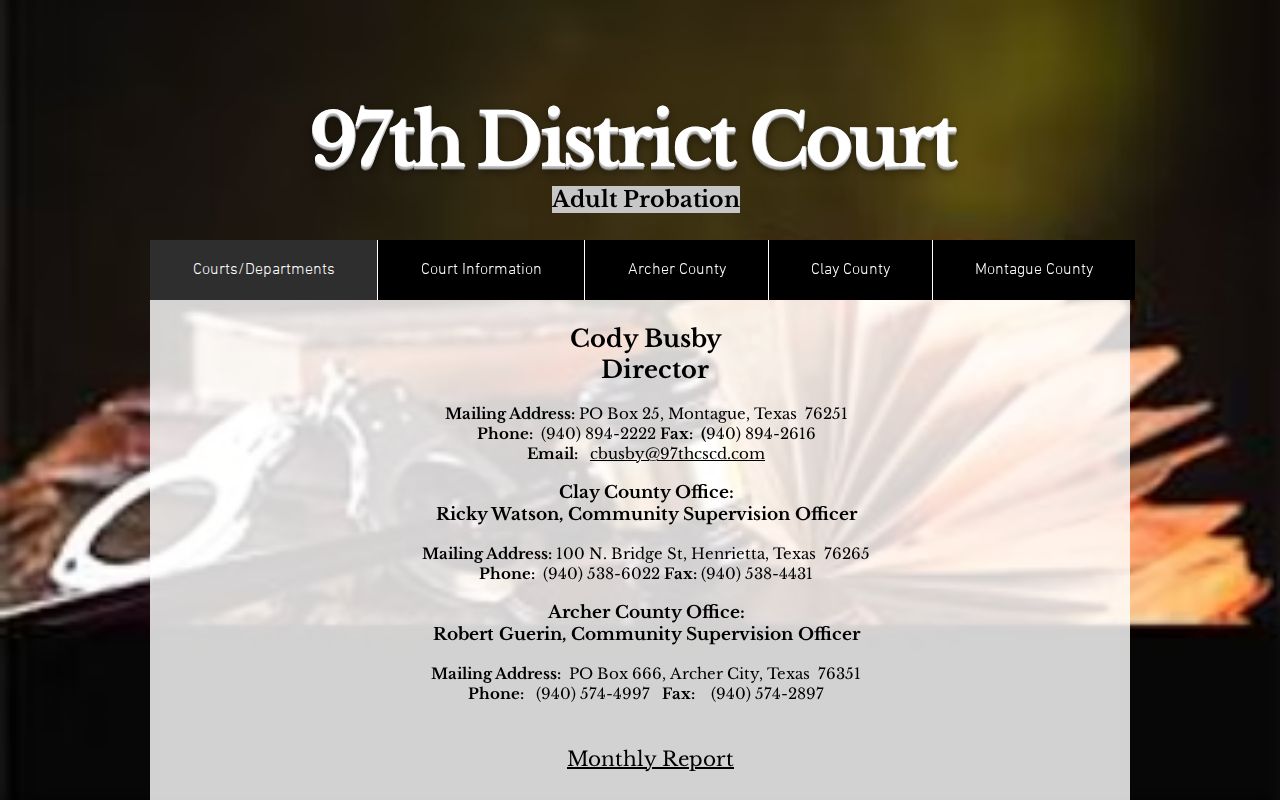
The displayed Archer CSO details belong to probation, not parole or jail release processing.
Archer Supervision Warrants and Absconders
An absconder is a supervised person whom the agency alleges has stopped reporting or cannot be located. A violation can lead to a warrant, added conditions, a hearing, or return to custody. It does not erase the earlier release. Likewise, a warrant record does not prove current confinement at Archer County Jail.
No official Archer County general absconder list was verified. TDCJ offers a narrow Sex Offender Absconder search, but that does not cover all parole or probation cases. Confirm a claimed warrant with the issuing authority, then check the current custodian separately. Conditions such as reporting, treatment, travel limits, or program completion depend on the individual order and should not be inferred from a vote code alone.
When Archer County Supervision Ends
Supervision ends through a formal discharge, not merely because a projected date passed or online information disappeared. For parole or mandatory supervision, ask TDCJ for the release, status, and discharge dates. TDCJ's Classification and Records functions and Parole Division records can clarify a fully discharged person's history when the public search no longer returns a result.
For probation, use the sentencing court and CSCD record. A signed order or official completion entry is stronger than an old calendar estimate. Texas Government Code Chapter 552 permits requests for releasable public records, but section 508.313 protects broader parole files. State retention and disclosure rules are not the same as a vendor's display period.
Texas IVSS notifications can help track future custody or supervision events, but they are not official discharge certificates. County IVSS coverage and TDCJ IVSS are separate. Any alert should be paired with the underlying agency record.
Archer Parole Review Is File-Based
Ordinary Texas parole matters are usually file reviews with sequential votes, not public county hearings on a monthly calendar. TDCJ identifies cases before eligibility, an institutional parole officer interviews the inmate, and a three-member BPP panel reviews the file. Two votes form a majority. No official calendar of individual Archer County parole hearings was found.
The official parole review process is the best source for timing and procedure.
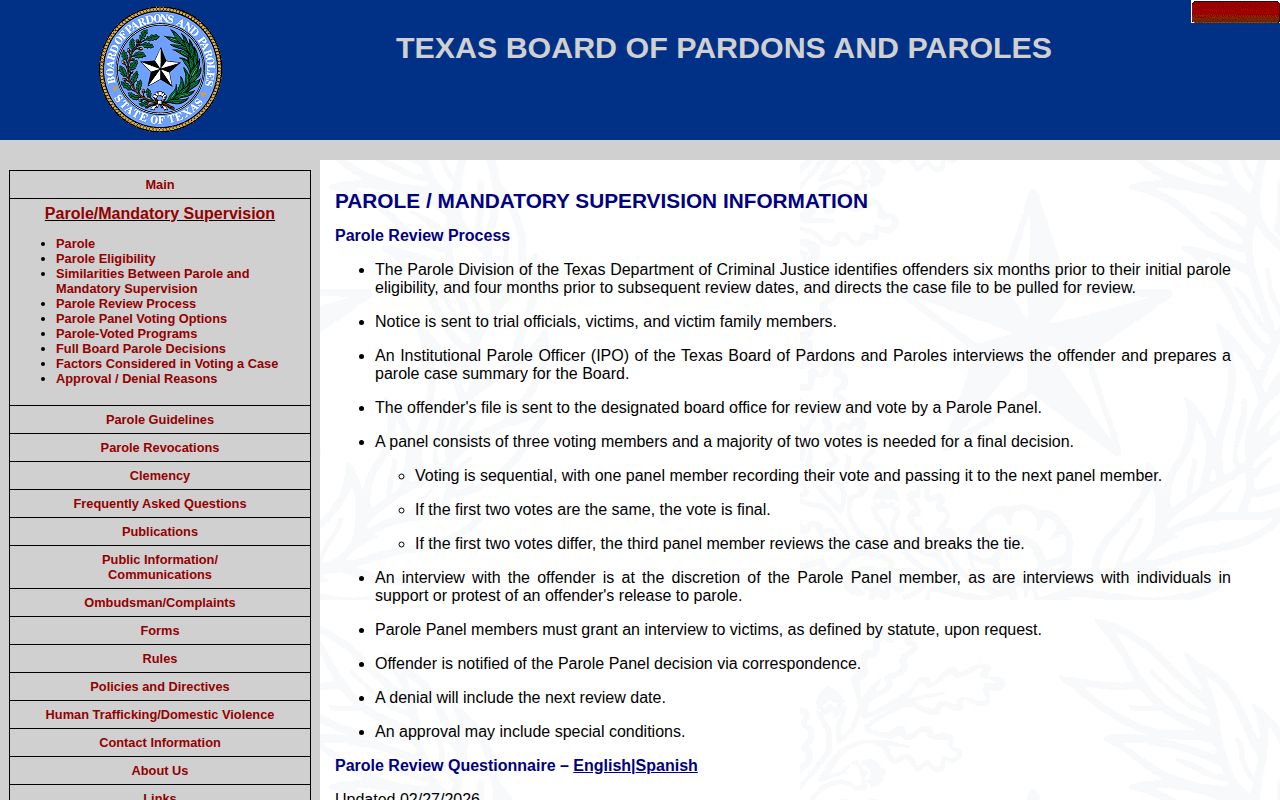
The review timing is a case-processing guide, not a promised Archer County release date.
Outcome codes matter. FI generally signals approval, sometimes with a program condition. RMS refers to release to mandatory supervision. NR sets a later review after denial, SA directs service of the remaining term, and DMS denies mandatory supervision with later review as applicable. The BPP vote-options page defines the current codes. Approval still is not proof of physical release because a program, detainer, or final processing can remain.
Archer Release Property Records
Post-release disputes sometimes concern identity papers or property rather than supervision status. Texas Local Schedule PS retains a county-jail property inventory or receipt for two years after release, while the jail register is permanent. A person disputing whether property was returned may request the PS4200-12 property record from the Archer County Sheriff and pair it with the PS4200-06 release-or-transfer entry.
This record does not establish parole conditions or probation compliance. It can, however, document what the jail recorded at the end of the booking. Documentary evidence should accompany any correction request. The originating Sheriff controls the local jail record, while TDCJ or CSCD controls the separate supervision record.
Note: Ask for the exact record series and booking identifier so release, transfer, property, and supervision facts do not become mixed.
Archer Supervision Record Boundaries
A public status check is narrower than a request for an entire supervision file. TDCJ identifies basic parole facts that may be released, including status, supervising officer name, sentence, county and court, release or discharge dates, and warrant information. Texas Government Code section 508.313 protects much of the broader parole file. Ask for the specific fact needed and expect protected material to be withheld.
Probation records begin with the court order. The docket and judgment establish the term, while the CSCD administers reporting and compliance. A clerk's record does not always prove current field status. Matching the case number and identifying facts helps prevent a status from being assigned to the wrong person.
Texas Government Code Chapter 552 allows requests for releasable information, subject to exceptions. A precise request asks for current public supervision status, assigned office, release or start date, discharge date, and public warrant status.
Archer Approval Is Not Release
A favorable BPP vote is one step. Some approval codes require a program. Others remain subject to records review, release planning, detainer checks, and preparation of a certificate. The scheduled date may move while that work is pending. Physical release is established by the completed TDCJ event, not by the vote alone.
Mandatory supervision is a supervised form of release, not an unconditional end to the sentence. Some offenses are excluded, and many eligible cases require a discretionary decision. A person can leave prison yet remain under TDCJ authority until formal discharge.
The Archer County release date lookup separates projected, approved, scheduled, and actual dates. Only the final agency record answers whether processing was completed.
Public Record Search
Sponsored Results